IMPAAKT Magazine | College Unscripted: Where Freedom Meets Responsibility

October 24, 2026

Think back to when you were eighteen. Did you know who you were, or only who you were expected to be? Did you know where you belonged? When the plan stopped working, who did you tell? Most of us worked out the answers slowly, and some of us are still working them out. Today’s college-bound students are asking the same questions. Will I find my people? What if I choose the wrong path? Who am I becoming? Too often, students keep those questions to themselves, behind talk of acceptance letters, majors, and housing. 

We invest heavily in preparing students to get into college. We invest far less in preparing them for what happens once they arrive. Our newest documentary, College Unscripted: Find Your Place. Make Your Mark., was made to open that conversation. 

Freedom meets responsibility 

College is one of life’s major transitions. For many students, it is the first time they hold this much freedom and this much responsibility at once. How will I spend my time, and with whom? What will I pursue? When do I need help? What do I do when the plan I had no longer fits? 

Freedom can be exhilarating, and it can be overwhelming. Academics compete with friendships, work with sleep, and opportunity with capacity. Anyone who has led an organization will recognize the tension: more options than hours, and decisions made before all the information is in. Students face it while they are still learning to understand and trust themselves. 

There is no script 

College Unscripted is a 30-minute documentary in which 14 college students speak candidly about their experience. There are no actors, no scripted answers, and no single version of college presented as the right one. 

The students talk about belonging and loneliness, relationships, achievement and burnout, managing time and money, changing direction, asking for help, facing setbacks, and figuring out who they are and how they want to show up in the world. 

Many arrive carrying a script. Sometimes they wrote it themselves. Sometimes parents, schools, peers, or cultural expectations shaped it: the right school, the right major, the right friends, the right timeline, the college experience they are “supposed” to be having. Then real life intervenes. Questioning those expectations can feel like losing your way. For many students, that is how they find it. 

Finding your place 

Belonging is the strongest thread in the film. Students want acceptance and connection, and that is natural. Lasting belonging asks something harder of them: building relationships and joining communities without losing themselves in the process. 

That takes courage. The courage to say yes and to say no, to introduce yourself, to ask for help, to change your mind, to recognize when you are overwhelmed, and to walk away from what does not feel right. Underneath all of it is the courage to trust your own voice. 

A different role for parents 

The transition changes the parent’s role as well. For years, parents could often see in real time when something was wrong. College removes that proximity, and connection has to become more intentional and less directive. 

The opportunity is to stop writing the script from a distance and to remain a trusted place a student can return to while they learn to run their own life. Alongside questions about grades, exams, and schedules, there is room for others. Who are you spending time with? What has been harder than you expected? What has been surprisingly good? What are you learning about yourself? 

Nobody needs to have every answer. What matters is keeping the relationship safe enough that the real answers surface over time. 

Why people watch together 

At Tell My Story, the film is only part of the experience. Across more than 400 screenings, we have seen what happens when young people and adults hear honest stories in the same room. 

A student recognizes an experience they thought was uniquely theirs. A parent hears something their own child may not yet know how to say. An educator sees past achievement to the person carrying everything underneath it. Everyone leaves with a shared understanding of one another. 

That is why our screenings do not end when the credits roll. A mental health professional facilitates a conversation afterward. We leave the question of how college should look to the students themselves. Our role is to create space for them to hear from one another, reflect on their own experience, and learn more about who they are. 

The rest is yours to write 

Every student in College Unscripted is still in the middle of their story. None of them has it all figured out, and that is much of the point. 

College is career preparation. It is also where young people practice making choices, navigating change, building relationships, recovering from setbacks, and discovering what matters enough to guide a life. 

If students leave the film with one message, I hope it is this: pay attention, know yourself, trust yourself, and make choices that reflect your values and who you are.

College Unscripted: Find Your Place. Make Your Mark. is available to high schools, colleges, universities, and communities at no cost. To host a free screening, visit https://www.tellmystory.org/films/college-unscripted

– By Jason Reid, Founder, Tell My Story 
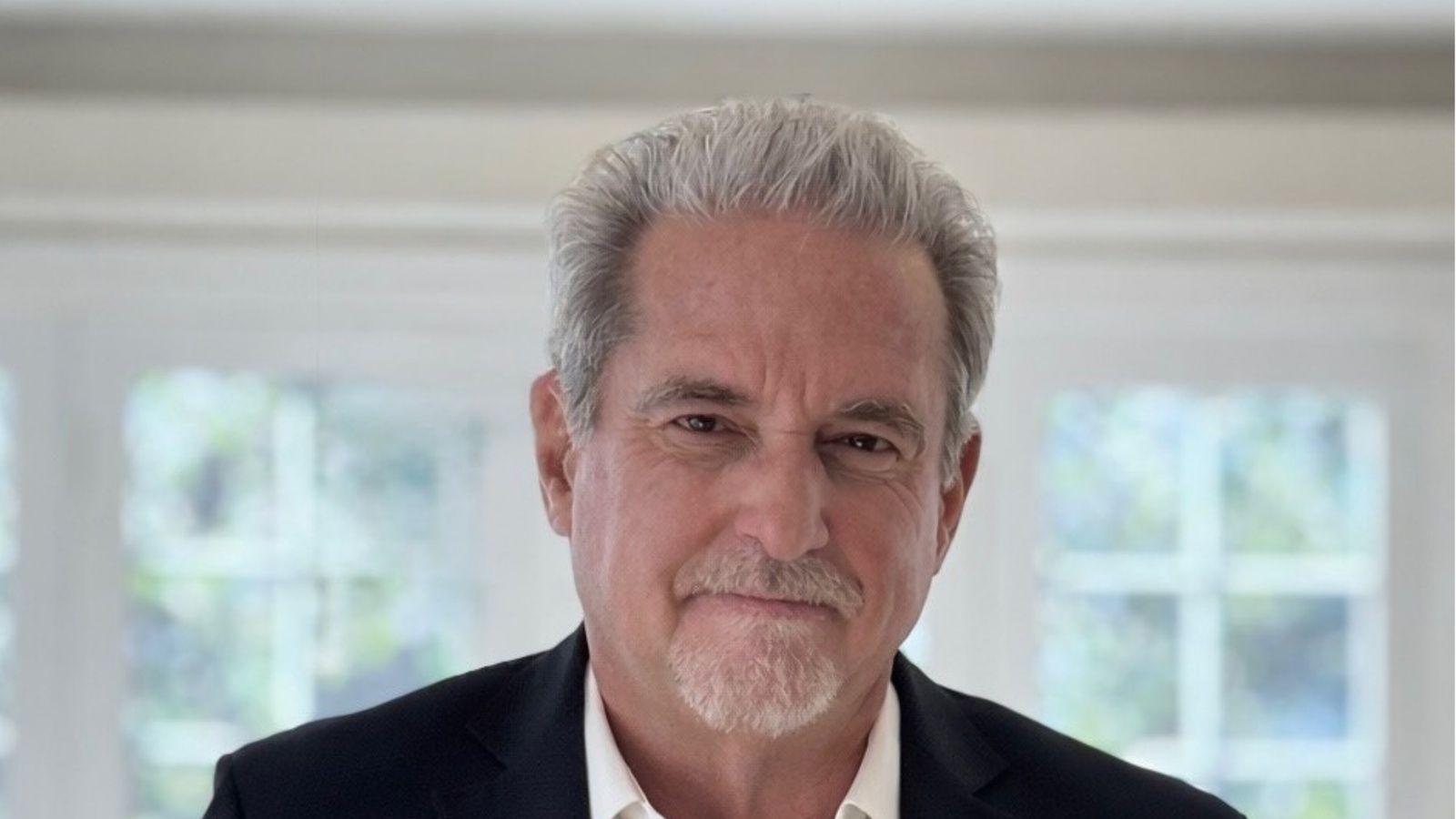

Jason Reid, founder of Tell My Story
By Tell My Story • November 24, 2026
Tell My Story founder Jason Reid is a featured speaker at the 2026 HOPE Global Forums Annual Meeting in Atlanta, speaking December 3, 2026.
September 30, 2026
I used to believe loving my kids was enough to keep them safe. I had four kids and a close bond with each of them. I gave them a steady home, my time, and my attention. I believed if something felt wrong, my kids would come to me. In 2018, I lost my 14-year-old son, Ryan. He was bright, funny, and warm. After losing him, the questions would not leave me. How had I missed the signs in a boy I knew so well?
Two men in suits flank bold text “why kids stopped finding joy” with a glowing brain graphic on a black background
September 28, 2026
Jason Reid returns to Doing Business with a Servant’s Heart to talk about why today’s kids are losing their joy, and the simple habit that can help bring it back.
September 16, 2026
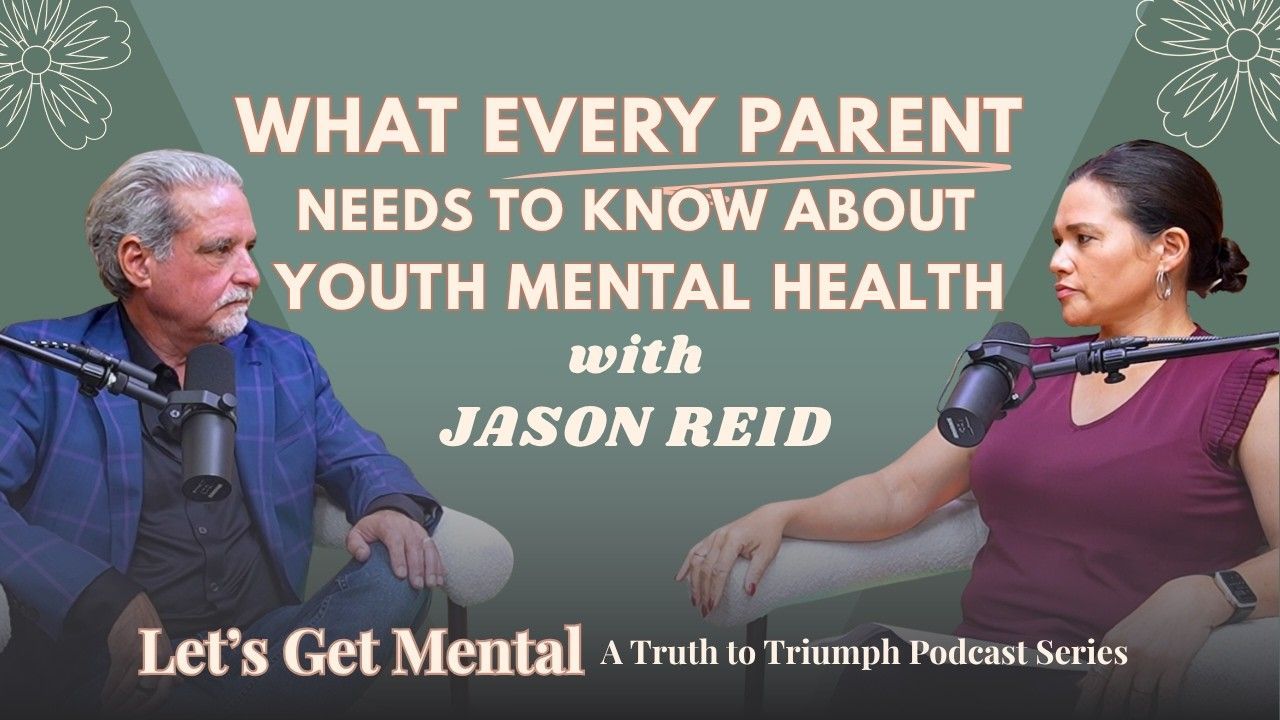
Most parents want to protect their children from pain. But what if the most protective thing we can do is learn to sit with them in it and ask the questions that feel the hardest to ask? In this episode of Let's Get Mental, part of the Truth to Triumph series, I sit down with Jason Reid, founder of Tell My Story, a nonprofit using documentary filmmaking to open life-changing conversations about youth mental health. After losing his 14-year-old son Ryan, Jason has spent eight years learning everything he wishes he had known and sharing it with families everywhere. In this episode, you will hear: Why Jason focuses on depression and anxiety rather than suicide itself and why that shift in focus matters. The clouds framework for understanding how a depressed mind sees the world and how to actually reach someone in that state. The questions parents are afraid to ask their kids and why asking them is so much safer than staying silent. Warning signs that are often missed because they do not look like what we expect. The films Tell My Story, What I Wish My Parents Knew, and Shift and how to bring them to your school or community. What Jason has learned about grief, acceptance, and why he keeps going. How workplaces can better support employees navigating mental health challenges at home. Practical ways to support your child's mental health beyond the conversation, including sleep, movement, creativity, and letting them find what they love. This episode was recorded during September's National Suicide Awareness and Prevention Month to encourage open and honest conversation that is deeply needed. Watch the full podcast here: The Signs of Teen Mental Health Struggles Most Parents Miss | Let's Get Mental Ep 5 RESOURCES 988 Suicide and Crisis Lifeline: Call or text 988, available 24/7 Tell My Story: www.tellmystory.org Tell My Story documentary: Available on Amazon Prime CONNECT WITH LIGAYA WELLNESS Website: www.ligayawellness.com Instagram/TikTok: @ligaya_wellness Podcast: Spotify / Apple links Speaking and Consulting: www.ligaya-wellness.com/contact-us
September 15, 2026
Back for a second time on The Just A Mom Podcast is entrepreneur, author, speaker, and filmmaker Jason Reid. Don’t miss this deeply personal conversation about grief, depression, and the power of creative purpose. Jason shares how the loss of his son Ryan to suicide changed his life, why he now focuses on helping parents and kids talk more honestly about mental health, and how his latest film, Shift, is designed to spark those conversations in schools and communities. We also discuss what self-care really looks like beyond the usual advice, why adults need creative outlets just as much as kids, and what Jason learned after discovering he may have been living with a form of depression himself. Listen on Apple Podcasts What is The Just A Mom Podcast? My name is Susie. I have three children, the youngest of whom struggles with depression, anxiety, and suicidal ideation. I never thought this could happen to me, and I missed the signs. Being a parent is really hard, and I'm here to help! I'm talking to parents and experts to help you with the issues your kids may face. I want you to know that you are not alone and there is hope. Website: https://www.thejustamompodcast.com/
September 8, 2026
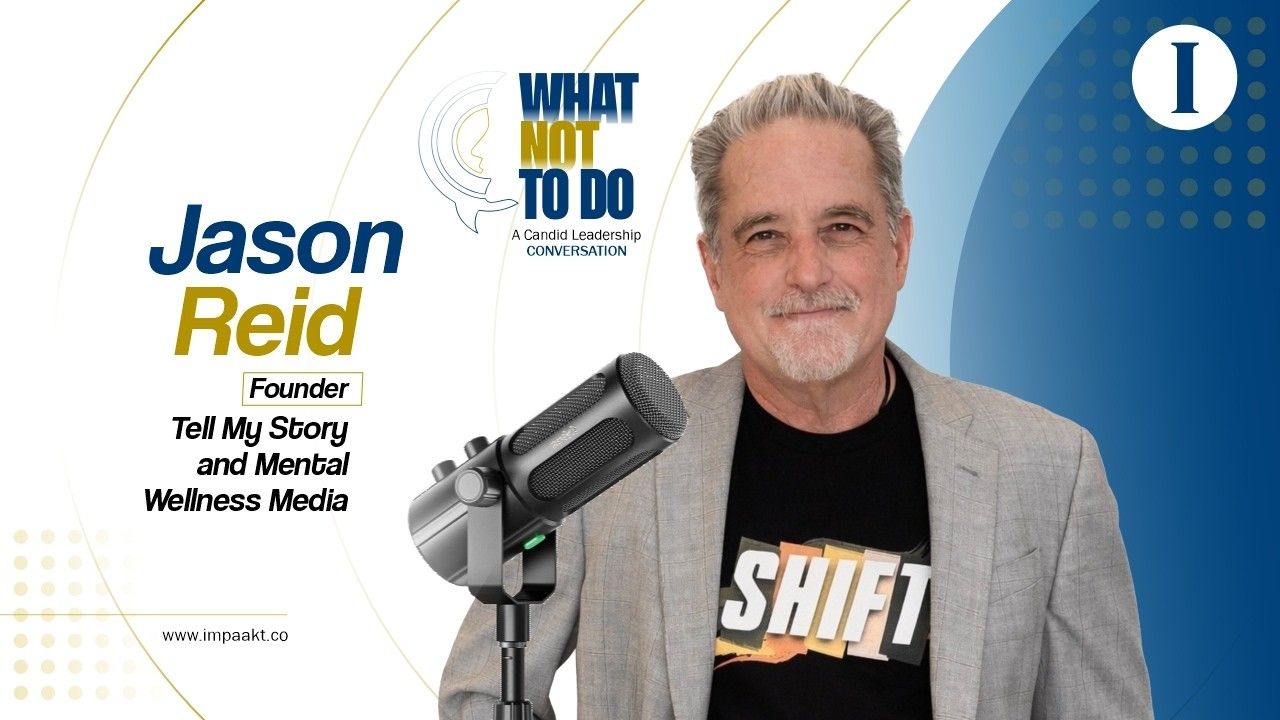
In this deeply personal episode of What Not To Do, Jason Reid, founder of Tell My Story and Mental Wellness Media, shares how the loss of his 14-year-old son, Ryan, changed his understanding of mental health, connection and the conversations we often fail to have. The conversation goes beyond mental health awareness. It asks a much harder question: What do we get wrong when someone we love is struggling? He also explores some of the subtle mistakes we make when trying to help: Assuming “I am fine” means everything is fine Trying to solve someone’s pain in one conversation Telling people their feelings are wrong Giving advice they did not ask for Pushing someone to talk before they are ready Invading the spaces where they feel safe Trying to change their perspective instead of understanding it Forgetting that sometimes the most important thing we can do is simply stay Watch the full conversation with Jason Reid and discover what not to do when someone is silently struggling. Behind “I’m Fine”: The Conversations We Need to Have | Jason Reid on What Not To Do
August 13, 2026
I have played guitar for 35 years. I am not good at it. I sing too, and I am worse at singing. I have written seven books, and I like to joke I have sold eight, because almost no one buys them. I have finished a couple of Ironman races, and I came in last in every one. Dead last. I keep doing all of it. Not for a medal or a record. I do it because I love the doing. Half an hour with my guitar a few times a week keeps me steady. That’s enough for me. I made our latest film, SHIFT: Do What Moves You , to put this idea in front of young people. Doing what moves you is not about being the best. It is about having something to move toward. I did not set out to spend my life talking about youth mental health. I started Tell My Story after I lost my 14-year-old son, Ryan, to suicide in 2018. In the years since, I have sat with hundreds of teenagers and families. The same thing comes up again and again. Young people are struggling in silence, and the adults who love them often do not see it in time. The scale is hard to take in. One in five U.S. high schoolers reported symptoms of depression and anxiety in the past two weeks, according to the CDC. Forty percent reported persistent feelings of sadness or hopelessness in the past year, also from the CDC. Suicide is the third leading cause of death among people aged 15 to 29 worldwide, according to the World Health Organization. Behind each number is a young person trying to get through the day. My job, and yours, is not only to keep them safe. It is to help them want to be here.
June 30, 2026
I recently took my granddaughter to Disneyland, and honestly, it was the best day I’ve ever had there. I’ve visited my kids many times, but this experience felt different. Back then, I was building companies and managing thousands of employees. Physically, I was at Disneyland with my kids, but mentally I was somewhere else: solving problems, fielding calls, handling budgets, payrolls and performance. This time, with my granddaughter, I was just there. Fully present. And it made me wonder how many times, while I was physically present in my children’s lives, I may have been emotionally absent because of the pressure I felt to perform, protect, and provide for my family. When I lost my son, Ryan, in 2018, he was just 14 years old. In the aftermath, the questions that consumed me were: Why didn’t I see the signs? Why didn’t he tell me? Looking back now, I find myself wondering what we, as parents who are also executives, corporate leaders, and CEOs, may be missing when it comes to our children; because we are so focused on providing for them and making sure their needs are met. Trying to make sense of the questions I had surrounding Ryan’s passing, and to help more parents better understand their children’s mental health, I created What I Wish My Parents Knew , a documentary about youth mental health. What these young people in the film said to me, stopped me in my tracks: “I didn’t tell my parents about my struggles with mental health, because I didn’t want to be a burden. They have enough going on as it is; I didn’t want to add to it.” What I have come to understand, both an executive and a father, is that the skills that make us effective leaders can quietly work against us as parents. We are fixers. We are decisive. We walk into a room, solve the problem, and move on. That’s what we’re paid to do, and that’s how many of us built our careers. But when a child is struggling with their mental health, they don’t usually need us to fix it right away. When we jump straight to problem-solving, we can unintentionally signal that their feelings are something to solve instead of something worth talking through. What our children need most is someone who listens to. Someone willing to sit with them in anxiety and the unknown, and who allows them to process what they’re going through without judgement or immediate solutions. That requires a very different muscle than the one many of us spent decades training. Another thing I’ve learned, and this one is harder to hear, is that our children may not always experience us as safe to talk to. Not because they doubt our love, but because of how we show up. They may see us in one of two ways: either bulletproof — strong, composed, never cracking or struggling — or overwhelmed, distracted, and carrying the stress of business and life. In both cases, they may choose silence. Not because they don’t trust us, but because they don’t want to disappoint us or add to the weight we’re already carrying.
May 25, 2026
Jason is the founder of TellMyStory.org, a nonprofit he launched after the suicide of his 14-year-old son in 2018. The foundation is dedicated to educating and empowering parents with practical, up-to-date resources to better recognize and support their children’s mental health struggles. Through its sister organization, Mental Wellness Media, Jason produces documentary films and educational programs that spark honest conversations between parents and kids and encourage families to share their stories. He has spoken openly about his experience in two TEDx talks and through the documentaries Tell My Story and What I Wish My Parents Knew, using his platform to reduce stigma and strengthen communication around youth mental health. Tell My Story – Official Home Page Our Story (About the Foundation & Jason’s Mission) Tell My Story Card Game (Communication Tool) Become a supporter of this podcast: The Trauma Therapist
May 14, 2026
In this episode, I sit down with Jason Reid — founder of Tell My Story Foundation, producer of the documentary films Tell My Story, What I Wish My Parents Knew, and Shift, author of seven books, Iron Man athlete, and a father who lost his 14-year-old son Ryan to suicide in 2018 while on vacation with his wife.