IMPAAKT Magazine Article #2 | Youth Mental Health: What I Wish I Knew Earlier

June 30, 2026

I recently took my granddaughter to Disneyland, and honestly, it was the best day I’ve ever had there. I’ve visited my kids many times, but this experience felt different. Back then, I was building companies and managing thousands of employees. Physically, I was at Disneyland with my kids, but mentally I was somewhere else: solving problems, fielding calls, handling budgets, payrolls and performance. This time, with my granddaughter, I was just there. Fully present. And it made me wonder how many times, while I was physically present in my children’s lives, I may have been emotionally absent because of the pressure I felt to perform, protect, and provide for my family. 


When I lost my son, Ryan, in 2018, he was just 14 years old. In the aftermath, the questions that consumed me were: Why didn’t I see the signs? Why didn’t he tell me? Looking back now, I find myself wondering what we, as parents who are also executives, corporate leaders, and CEOs, may be missing when it comes to our children; because we are so focused on providing for them and making sure their needs are met.


Trying to make sense of the questions I had surrounding Ryan’s passing, and to help more parents better understand their children’s mental health, I created What I Wish My Parents Knew, a documentary about youth mental health. What these young people in the film said to me, stopped me in my tracks: “I didn’t tell my parents about my struggles with mental health, because I didn’t want to be a burden. They have enough going on as it is; I didn’t want to add to it.”


What I have come to understand, both an executive and a father, is that the skills that make us effective leaders can quietly work against us as parents. We are fixers. We are decisive. We walk into a room, solve the problem, and move on. That’s what we’re paid to do, and that’s how many of us built our careers.


But when a child is struggling with their mental health, they don’t usually need us to fix it right away. When we jump straight to problem-solving, we can unintentionally signal that their feelings are something to solve instead of something worth talking through. What our children need most is someone who listens to. Someone willing to sit with them in anxiety and the unknown, and who allows them to process what they’re going through without judgement or immediate solutions. That requires a very different muscle than the one many of us spent decades training.


Another thing I’ve learned, and this one is harder to hear, is that our children may not always experience us as safe to talk to. Not because they doubt our love, but because of how we show up. They may see us in one of two ways: either bulletproof — strong, composed, never cracking or struggling — or overwhelmed, distracted, and carrying the stress of business and life. In both cases, they may choose silence. Not because they don’t trust us, but because they don’t want to disappoint us or add to the weight we’re already carrying.

Isn’t that a very different problem than the one most of us think we’re dealing with?

As parents, we often assume our kids aren’t talking to us because they’re distant, moody, or going through a phase. But what these young people told me painted a very different picture. They’re not always shutting us out. Sometimes they filter themselves to protect us. They’re trying to be strong in the same way they’ve watched us be strong. And when feelings are bottled up, they don’t just disappear. They come out somewhere else: anger, withdrawal, perfectionism, silence, or something far more dangerous. A child can still go to school, laugh at dinner, and seem completely fine, while struggling in ways we never see. Ryan did.


One of the biggest realizations for me has been that it’s not just about whether our kids are struggling. It’s whether they feel safe bringing their struggles to us. So what does this mean for those of us who run companies, lead teams, and are trying to be present at home in whatever time we have left at the end of the day?


It starts with a shift in how we think about safety. Most of us are good at providing physical safety: a home, financial security, opportunities and stability. Those things matter, and they’re important. But alongside them, our kids also need emotional safety. And emotional safety is usually built — or eroded — in small everyday moments, not in big conversations. It’s in how we respond when our kids talk about their day, their interests, frustrations, and even details that may seem insignificant to us. Do we really listen, or do we interrupt? Are we genuinely interested in what they’re saying? Do we try to understand and stay present, or are we rushing the conversation so we can get back to work? 


In What I Wish My Parents Knew, one idea really stood out to me: two people can look at the exact same situation and experience it completely differently. What feels manageable to us can feel overwhelming to our kids. We may look outside and see a blue sky, while our child standing right next to us, sees only clouds. And if we keep telling them the sky is clear, eventually they may stop telling us about the clouds altogether. What they need is for us to ask about the clouds. What do they look like? Do they come and go, or are they always there? What makes them worse? What helps them lift, even if for a little while? This kind of listening does not mean we ignore serious warning signs or avoid getting professional help when it’s needed. It simply means we listen first so we can better understand what kind of help is actually needed.


One more thing worth acknowledging is that we can be intimidating to our kids, even when we don’t mean to be. We’re still their parents: the authority figures, the ones who correct, question, discipline, and make decisions. So when we walk into their room and say “we need to talk,” we may unintentionally shut the door before a conversation even starts. The most meaningful conversations don’t usually happen face-to-face across a table. They happen side by side: in the car, on a walk, on the way to school, or during everyday routines. The less a child feels examined, the more likely they are to open up.


One of the simplest and most impactful things we can do in those moments is to be fully present and just listen. We have to show our kids they’re not a burden by being present when they reach out, putting distractions aside, and making time even when it’s inconvenient. And just as importantly, by following through when we say we’ll come back and talk.


If you are wondering how to start, don’t wait for the big conversations. Make room for the small ones. Put the phone down. Leave work aside. Slow down enough to really listen.. Show genuine interest in their daily lives because those everyday moments teach your child whether it’s safe to be honest with you when it really matters. And sometimes, that can be the difference between a young person struggling in silence and a young person finally starting a conversation.

August 13, 2026
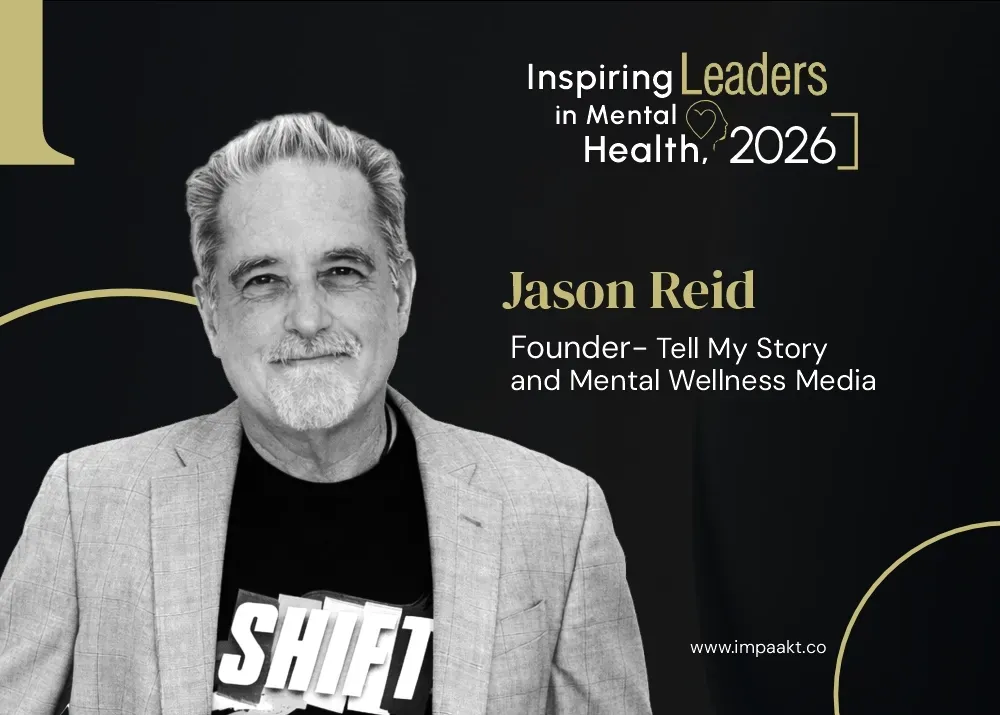
I have played guitar for 35 years. I am not good at it. I sing too, and I am worse at singing. I have written seven books, and I like to joke I have sold eight, because almost no one buys them. I have finished a couple of Ironman races, and I came in last in every one. Dead last. I keep doing all of it. Not for a medal or a record. I do it because I love the doing. Half an hour with my guitar a few times a week keeps me steady. That’s enough for me. I made our latest film, SHIFT: Do What Moves You , to put this idea in front of young people. Doing what moves you is not about being the best. It is about having something to move toward. I did not set out to spend my life talking about youth mental health. I started Tell My Story after I lost my 14-year-old son, Ryan, to suicide in 2018. In the years since, I have sat with hundreds of teenagers and families. The same thing comes up again and again. Young people are struggling in silence, and the adults who love them often do not see it in time. The scale is hard to take in. One in five U.S. high schoolers reported symptoms of depression and anxiety in the past two weeks, according to the CDC. Forty percent reported persistent feelings of sadness or hopelessness in the past year, also from the CDC. Suicide is the third leading cause of death among people aged 15 to 29 worldwide, according to the World Health Organization. Behind each number is a young person trying to get through the day. My job, and yours, is not only to keep them safe. It is to help them want to be here.
May 28, 2026
In this article, Jason Reid draws on both heartbreaking personal loss and years of research to offer parents a clearer picture of what their children may be silently experiencing. After losing his 14-year-old son Ryan to suicide in 2018, Reid embarked on a mission to bridge the gap between what parents assume and what teens actually feel.
May 28, 2026
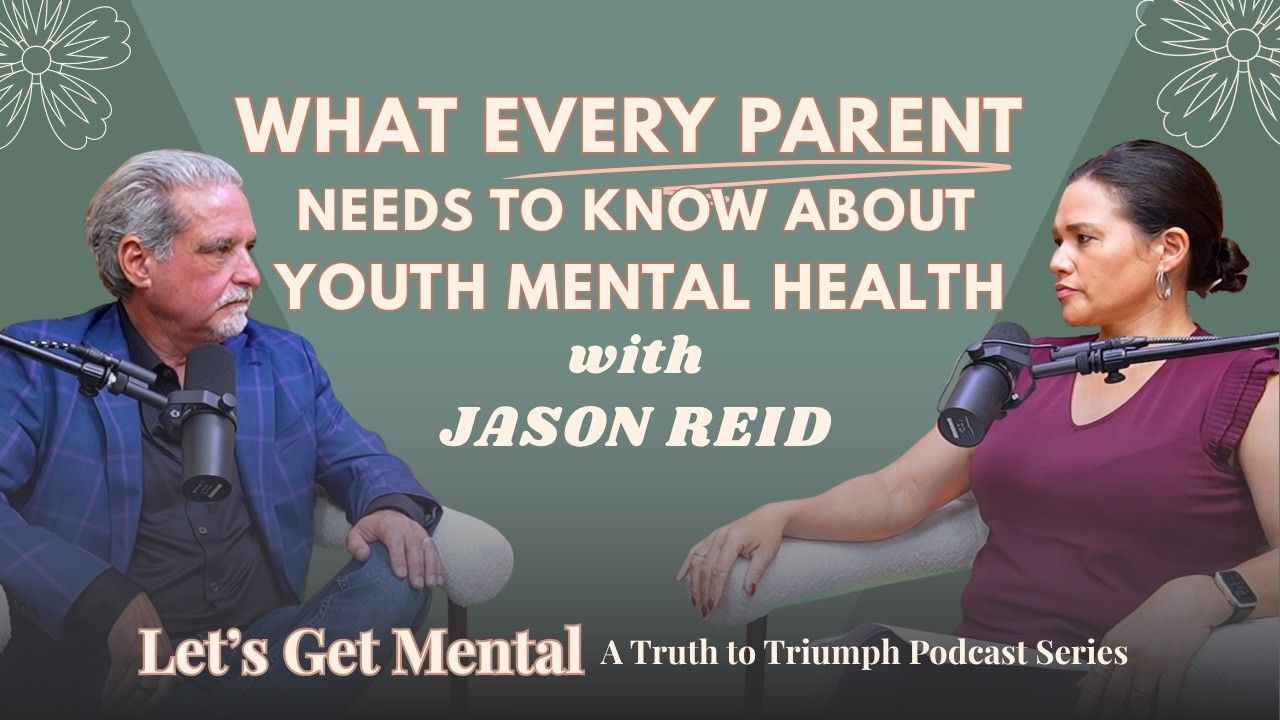
In this episode, I sit down with Jason Reid — founder of Tell My Story Foundation, producer of the documentary films Tell My Story, What I Wish My Parents Knew, and Shift, author of seven books, Iron Man athlete, and a father who lost his 14-year-old son Ryan to suicide in 2018 while on vacation with his wife.
May 28, 2026
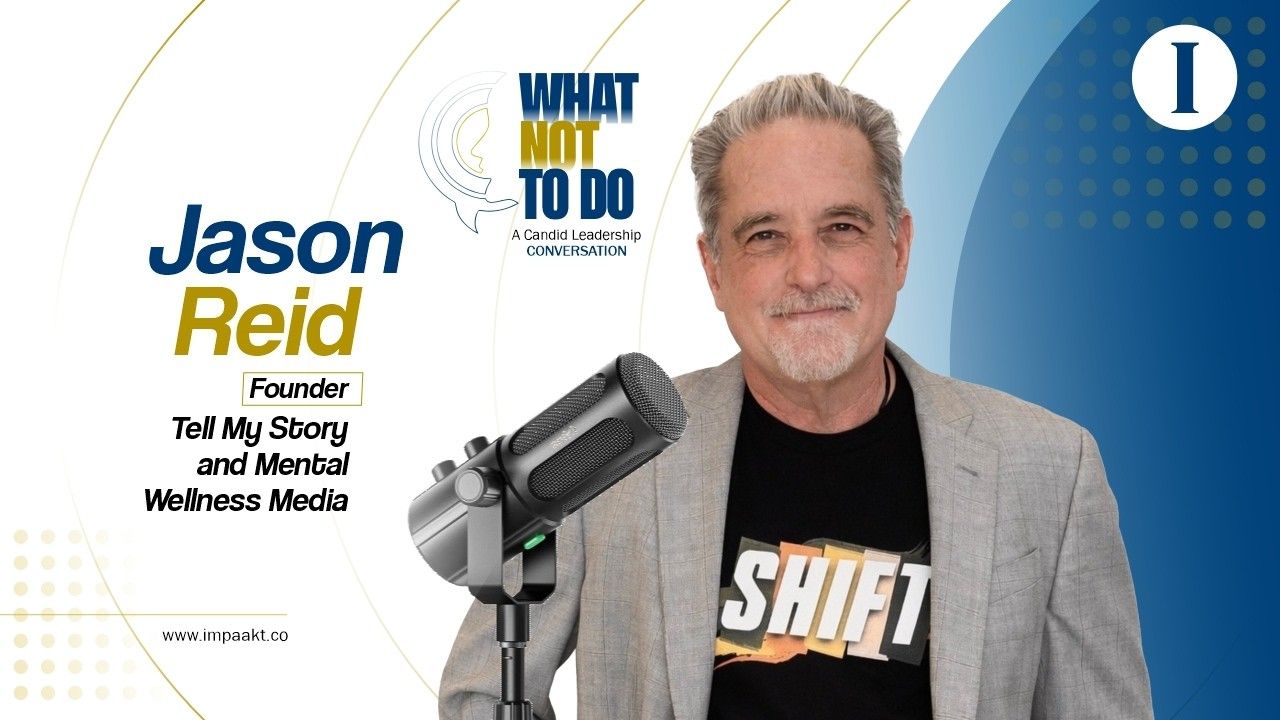
Jason is the founder of TellMyStory.org, a nonprofit he launched after the suicide of his 14-year-old son in 2018. The foundation is dedicated to educating and empowering parents with practical, up-to-date resources to better recognize and support their children’s mental health struggles. Through its sister organization, Mental Wellness Media, Jason produces documentary films and educational programs that spark honest conversations between parents and kids and encourage families to share their stories. He has spoken openly about his experience in two TEDx talks and through the documentaries Tell My Story and What I Wish My Parents Knew, using his platform to reduce stigma and strengthen communication around youth mental health. Tell My Story – Official Home Page Our Story (About the Foundation & Jason’s Mission) Tell My Story Card Game (Communication Tool) Become a supporter of this podcast: The Trauma Therapist
May 22, 2026
“The opposite of depression is not happiness, but connection.” – Johann Hari In this episode, Logan and Tyson sit down with Dana Christian Lee and Jason Reid from the organization Tell My Story to talk about the growing mental health crisis facing kids and teens today—and what families can actually do about it. Jason shares the heartbreaking and deeply personal story of losing his youngest son to suicide in 2018, a tragedy that reshaped his life and ignited a mission to bring real mental health conversations into homes that often avoid them. Dana, the executive director of Tell My Story, adds her perspective from years of working with youth, families, and communities—helping unpack why so many kids struggle silently and what meaningful connection really looks like. The conversation covers the realities many parents don’t see: how common anxiety and depression have become, why kids often feel like a burden instead of asking for help, and how today’s digital world—especially unrestricted phones, social media, and algorithms—can quietly amplify those struggles. They also talk about practical ways families can build trust, communication, and emotional safety, including tools like the Tell My Story card game, and why creativity, purpose, and learning to do hard things matter so much for a young person’s mental health. This is an honest, emotional, and ultimately hopeful conversation about loss, parenting, connection, and what each of us can do right now to change the mental health narrative for the next generation. If this episode speaks to you, share it with someone. Sometimes one conversation really can save a life. LISTEN / SUBSCRIBE TO “DAD BODS and BEARDS” Podcast: YouTube Apple Music Spotify
May 7, 2026
Jason Reid is a successful entrepreneur, executive coach, and filmmaker whose life changed forever in 2018 when he lost his 14-year-old son to suicide. Instead of retreating into despair, Jason transformed his grief into a mission: helping parents and kids navigate mental health challenges through storytelling and conn
May 1, 2026
Jason Reid shares how personal loss reshaped his mission, turning storytelling into a powerful tool for mental health awareness, workplace wellness, and deeper parent-child conversations. 
May 1, 2026
In this episode of The Teaching Journeys Podcast, host Dave Roberts welcomes back Dana Christian Lee, executive director of the nonprofit "Tell My Story." The conversation centers on creative approaches to healing and mental wellbeing for young adults, highlighting the power of storytelling, community, and self-expression. Dana shares the origins of "Tell My Story," inspired by Jason Reid’s personal loss and mission to support youth mental health through film and open communication. The discussion introduces their new film, "Shift: Do What Moves You," which features young people overcoming challenges by finding activities and passions that help them heal and thrive—ranging from skateboarding to poetry and music. The episode explores the impact of social media and AI on youth mental health, emphasizing the importance of real-life connection, resilience, and community support. Both guests advocate for empowering young adults to take ownership of their wellbeing, encouraging small steps, creative outlets, and the healing power of nature and movement. Listeners are invited to learn more about the film and nonprofit, with free screenings available through partnership. The episode closes with a message of hope, gratitude, and the belief that together, we can foster a more positive narrative around mental health. 
May 1, 2026
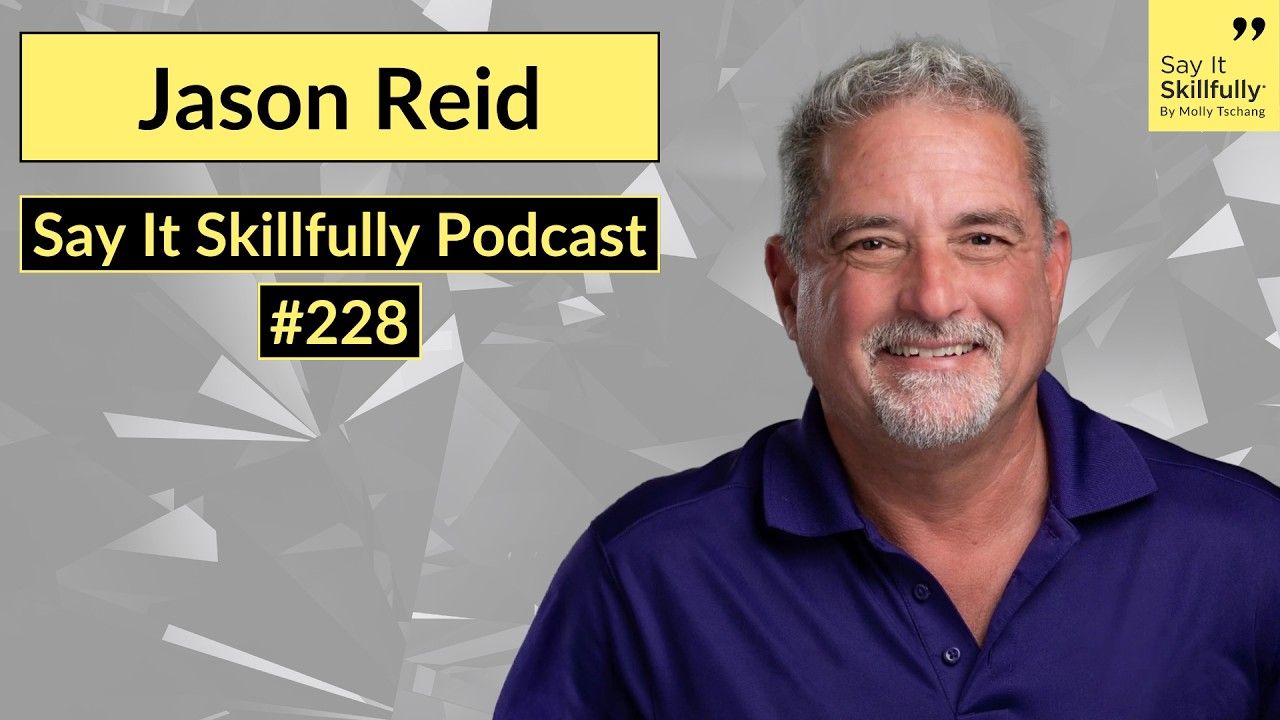
In Episode 228 of the Say It Skillfully® podcast, Molly welcomes back storyteller, entrepreneur, and founder of Tell My Story , Jason Reid. After the tragic loss of his 14-year-old son Ryan to suicide in 2018, Jason transformed unimaginable grief into a mission to help families better understand youth mental health and create spaces where young people feel seen, valued, and supported. In this powerful and deeply human conversation, Jason shares the inspiration behind his new film Shift: Do What Moves You , which highlights how purpose, passion, and personal interests can help young people rise above depression and anxiety. The discussion explores the importance of creating safe conversations around mental health, the role of parents in supporting their children’s emotional wellbeing, and why having a hobby or passion outside of work or school can be life-changing. Jason also reflects on personal growth, the power of curiosity, and why learning about emerging technologies like AI is essential in a rapidly changing world. From parenting insights to leadership lessons, this episode is filled with practical wisdom for anyone seeking to live more intentionally and help others do the same. Jason’s message is both hopeful and practical: finding what moves you—and encouraging others to do the same—can create profound change in both individual lives and communities.