Doing Business with a Servant's Heart | Creative Storytelling for Mental Health Awareness with Jason Reid

Jason Reid • February 26, 2025

Losing a child is an unimaginable pain, one that Jason Reed knows all too well after the heartbreaking loss of his 14-year-old son, Ryan, to suicide. This tragedy became the catalyst for Jason’s mission to transform despair into hope by advocating for youth mental health. Through projects like his powerful film "Tell My Story" and his impactful TEDx talks, Jason is determined to bridge the generational gap and address the unprecedented pressures faced by today’s youth. From the relentless academic demands to the pervasive reach of digital connectivity, Jason shares profound insights into the unique challenges that shape the mental well-being of young people today.


Communication emerges as a cornerstone of support in our conversation with Jason, as he stresses the importance of being present and listening to children without the urge to fix or solve. By using the metaphor of clear skies and clouds, Jason helps us understand the complexities of mental health issues like depression and anxiety from a child's perspective. It becomes clear that prioritizing mental health with the same care as physical health is essential for creating a safe space for children to share their emotions. Jason's approach aligns with fostering open dialogue, empowering parents to become attentive listeners, and easing the emotional burdens kids often carry in silence.


Beyond his advocacy, Jason is a creative force, channeling his experiences into storytelling through novels, screenplays, and his YouTube series "Ghost Town USA." His commitment to mental health advocacy is matched by a fervor for engaging conversations, evident in his choice of hypothetical dinner guests like the Pope, Vladimir Putin, and Volodymyr Zelensky. As we wrap up this episode, we reflect on the power of podcasting as a tool for sharing transformative insights and experiences, encouraging our listeners to spread this episode like a gift, one that could bring understanding and support to someone’s life. Join us in our heartfelt journey of Doing Business with a Servant's Heart, and be prepared to gain new perspectives on mental health and communication.

Media: Doing Business with a Servants Heart
September 16, 2026
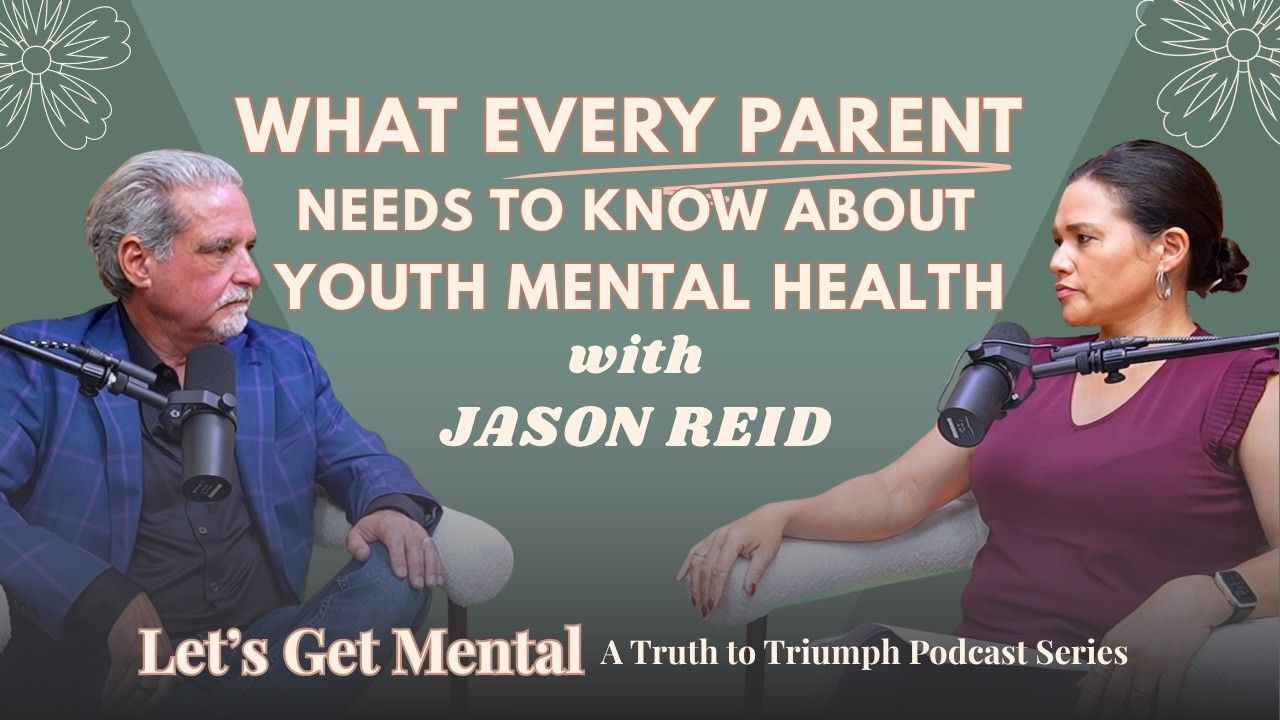
Most parents want to protect their children from pain. But what if the most protective thing we can do is learn to sit with them in it and ask the questions that feel the hardest to ask? In this episode of Let's Get Mental, part of the Truth to Triumph series, I sit down with Jason Reid, founder of Tell My Story, a nonprofit using documentary filmmaking to open life-changing conversations about youth mental health. After losing his 14-year-old son Ryan, Jason has spent eight years learning everything he wishes he had known and sharing it with families everywhere. In this episode, you will hear: Why Jason focuses on depression and anxiety rather than suicide itself and why that shift in focus matters. The clouds framework for understanding how a depressed mind sees the world and how to actually reach someone in that state. The questions parents are afraid to ask their kids and why asking them is so much safer than staying silent. Warning signs that are often missed because they do not look like what we expect. The films Tell My Story, What I Wish My Parents Knew, and Shift and how to bring them to your school or community. What Jason has learned about grief, acceptance, and why he keeps going. How workplaces can better support employees navigating mental health challenges at home. Practical ways to support your child's mental health beyond the conversation, including sleep, movement, creativity, and letting them find what they love. This episode was recorded during September's National Suicide Awareness and Prevention Month to encourage open and honest conversation that is deeply needed. Watch the full podcast here: The Signs of Teen Mental Health Struggles Most Parents Miss | Let's Get Mental Ep 5 RESOURCES 988 Suicide and Crisis Lifeline: Call or text 988, available 24/7 Tell My Story: www.tellmystory.org Tell My Story documentary: Available on Amazon Prime CONNECT WITH LIGAYA WELLNESS Website: www.ligayawellness.com Instagram/TikTok: @ligaya_wellness Podcast: Spotify / Apple links Speaking and Consulting: www.ligaya-wellness.com/contact-us
September 8, 2026
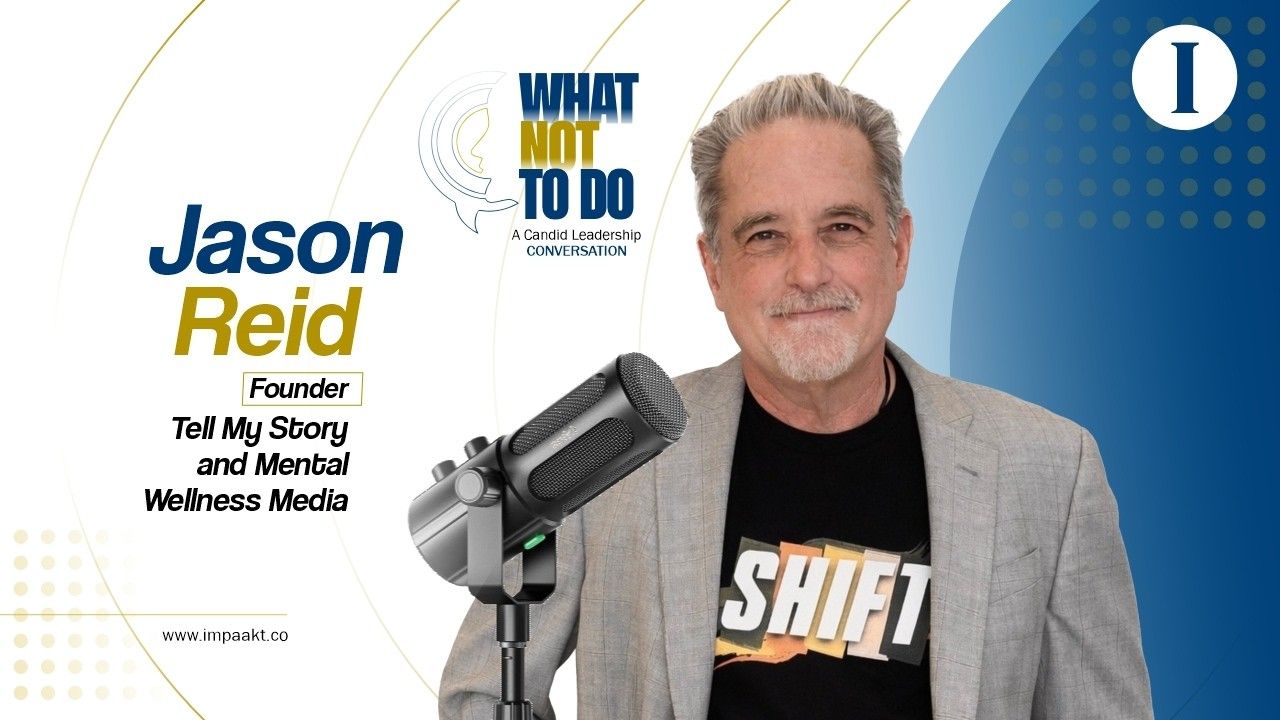
In this deeply personal episode of What Not To Do, Jason Reid, founder of Tell My Story and Mental Wellness Media, shares how the loss of his 14-year-old son, Ryan, changed his understanding of mental health, connection and the conversations we often fail to have. The conversation goes beyond mental health awareness. It asks a much harder question: What do we get wrong when someone we love is struggling? He also explores some of the subtle mistakes we make when trying to help: Assuming “I am fine” means everything is fine Trying to solve someone’s pain in one conversation Telling people their feelings are wrong Giving advice they did not ask for Pushing someone to talk before they are ready Invading the spaces where they feel safe Trying to change their perspective instead of understanding it Forgetting that sometimes the most important thing we can do is simply stay Watch the full conversation with Jason Reid and discover what not to do when someone is silently struggling. Behind “I’m Fine”: The Conversations We Need to Have | Jason Reid on What Not To Do
August 13, 2026
I have played guitar for 35 years. I am not good at it. I sing too, and I am worse at singing. I have written seven books, and I like to joke I have sold eight, because almost no one buys them. I have finished a couple of Ironman races, and I came in last in every one. Dead last. I keep doing all of it. Not for a medal or a record. I do it because I love the doing. Half an hour with my guitar a few times a week keeps me steady. That’s enough for me. I made our latest film, SHIFT: Do What Moves You , to put this idea in front of young people. Doing what moves you is not about being the best. It is about having something to move toward. I did not set out to spend my life talking about youth mental health. I started Tell My Story after I lost my 14-year-old son, Ryan, to suicide in 2018. In the years since, I have sat with hundreds of teenagers and families. The same thing comes up again and again. Young people are struggling in silence, and the adults who love them often do not see it in time. The scale is hard to take in. One in five U.S. high schoolers reported symptoms of depression and anxiety in the past two weeks, according to the CDC. Forty percent reported persistent feelings of sadness or hopelessness in the past year, also from the CDC. Suicide is the third leading cause of death among people aged 15 to 29 worldwide, according to the World Health Organization. Behind each number is a young person trying to get through the day. My job, and yours, is not only to keep them safe. It is to help them want to be here.
June 30, 2026
I recently took my granddaughter to Disneyland, and honestly, it was the best day I’ve ever had there. I’ve visited my kids many times, but this experience felt different. Back then, I was building companies and managing thousands of employees. Physically, I was at Disneyland with my kids, but mentally I was somewhere else: solving problems, fielding calls, handling budgets, payrolls and performance. This time, with my granddaughter, I was just there. Fully present. And it made me wonder how many times, while I was physically present in my children’s lives, I may have been emotionally absent because of the pressure I felt to perform, protect, and provide for my family. When I lost my son, Ryan, in 2018, he was just 14 years old. In the aftermath, the questions that consumed me were: Why didn’t I see the signs? Why didn’t he tell me? Looking back now, I find myself wondering what we, as parents who are also executives, corporate leaders, and CEOs, may be missing when it comes to our children; because we are so focused on providing for them and making sure their needs are met. Trying to make sense of the questions I had surrounding Ryan’s passing, and to help more parents better understand their children’s mental health, I created What I Wish My Parents Knew , a documentary about youth mental health. What these young people in the film said to me, stopped me in my tracks: “I didn’t tell my parents about my struggles with mental health, because I didn’t want to be a burden. They have enough going on as it is; I didn’t want to add to it.” What I have come to understand, both an executive and a father, is that the skills that make us effective leaders can quietly work against us as parents. We are fixers. We are decisive. We walk into a room, solve the problem, and move on. That’s what we’re paid to do, and that’s how many of us built our careers. But when a child is struggling with their mental health, they don’t usually need us to fix it right away. When we jump straight to problem-solving, we can unintentionally signal that their feelings are something to solve instead of something worth talking through. What our children need most is someone who listens to. Someone willing to sit with them in anxiety and the unknown, and who allows them to process what they’re going through without judgement or immediate solutions. That requires a very different muscle than the one many of us spent decades training. Another thing I’ve learned, and this one is harder to hear, is that our children may not always experience us as safe to talk to. Not because they doubt our love, but because of how we show up. They may see us in one of two ways: either bulletproof — strong, composed, never cracking or struggling — or overwhelmed, distracted, and carrying the stress of business and life. In both cases, they may choose silence. Not because they don’t trust us, but because they don’t want to disappoint us or add to the weight we’re already carrying.
May 25, 2026
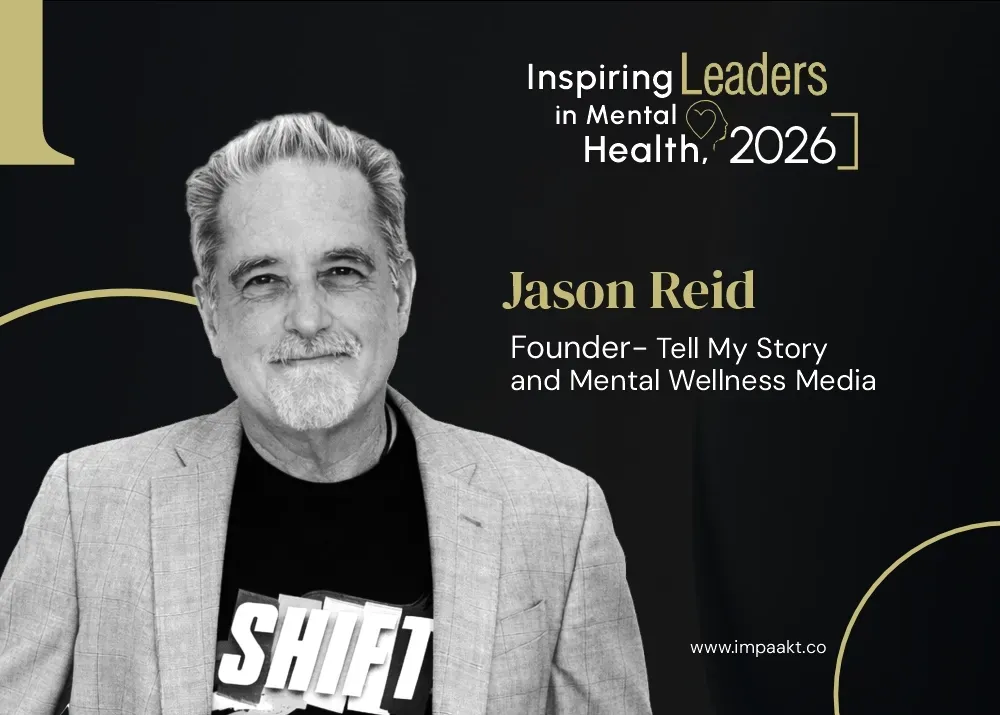
Jason is the founder of TellMyStory.org, a nonprofit he launched after the suicide of his 14-year-old son in 2018. The foundation is dedicated to educating and empowering parents with practical, up-to-date resources to better recognize and support their children’s mental health struggles. Through its sister organization, Mental Wellness Media, Jason produces documentary films and educational programs that spark honest conversations between parents and kids and encourage families to share their stories. He has spoken openly about his experience in two TEDx talks and through the documentaries Tell My Story and What I Wish My Parents Knew, using his platform to reduce stigma and strengthen communication around youth mental health. Tell My Story – Official Home Page Our Story (About the Foundation & Jason’s Mission) Tell My Story Card Game (Communication Tool) Become a supporter of this podcast: The Trauma Therapist
May 14, 2026
In this episode, I sit down with Jason Reid — founder of Tell My Story Foundation, producer of the documentary films Tell My Story, What I Wish My Parents Knew, and Shift, author of seven books, Iron Man athlete, and a father who lost his 14-year-old son Ryan to suicide in 2018 while on vacation with his wife.
April 20, 2026
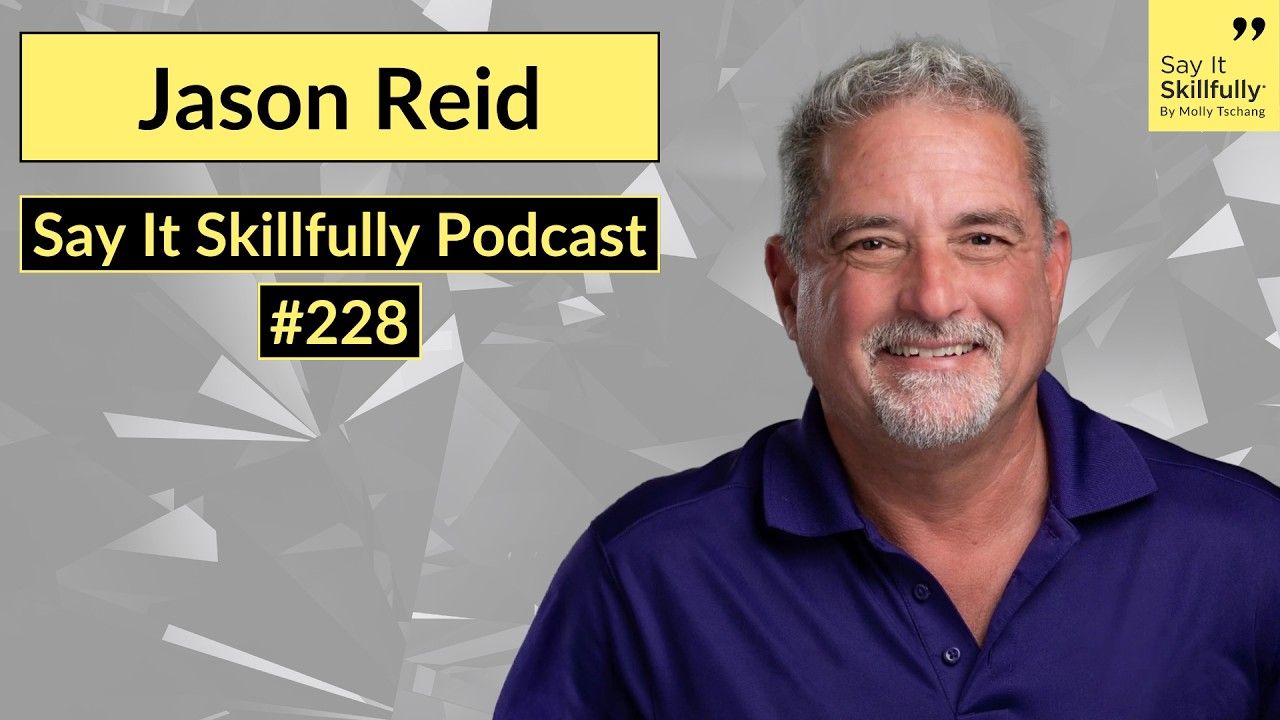
In Episode 228 of the Say It Skillfully® podcast, Molly welcomes back storyteller, entrepreneur, and founder of Tell My Story , Jason Reid. After the tragic loss of his 14-year-old son Ryan to suicide in 2018, Jason transformed unimaginable grief into a mission to help families better understand youth mental health and create spaces where young people feel seen, valued, and supported. In this powerful and deeply human conversation, Jason shares the inspiration behind his new film Shift: Do What Moves You , which highlights how purpose, passion, and personal interests can help young people rise above depression and anxiety. The discussion explores the importance of creating safe conversations around mental health, the role of parents in supporting their children’s emotional wellbeing, and why having a hobby or passion outside of work or school can be life-changing. Jason also reflects on personal growth, the power of curiosity, and why learning about emerging technologies like AI is essential in a rapidly changing world. From parenting insights to leadership lessons, this episode is filled with practical wisdom for anyone seeking to live more intentionally and help others do the same. Jason’s message is both hopeful and practical: finding what moves you—and encouraging others to do the same—can create profound change in both individual lives and communities.
April 4, 2026
Jason Reid shares how personal loss reshaped his mission, turning storytelling into a powerful tool for mental health awareness, workplace wellness, and deeper parent-child conversations. 
April 4, 2026
In this article, Jason Reid draws on both heartbreaking personal loss and years of research to offer parents a clearer picture of what their children may be silently experiencing. After losing his 14-year-old son Ryan to suicide in 2018, Reid embarked on a mission to bridge the gap between what parents assume and what teens actually feel.